
Where Change Begins
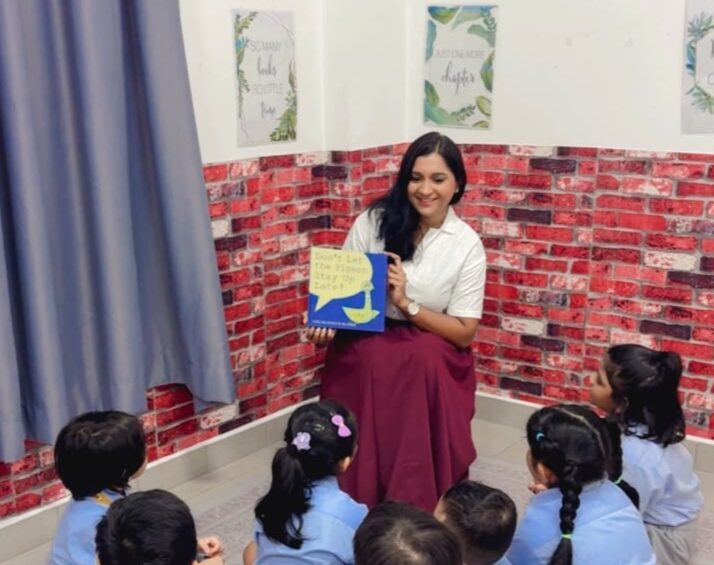
Where Change Begins
By Ms Anba, Year 1 Teacher, Knewton Global Schools Rawang
There was a time when my classroom looked very different. Before stepping into a Year 1 classroom, I spent my days in lecture halls, teaching psychology students and discussing theories of human behaviour, development, learning, and the many factors that shape who we become. Education has always been a significant part of my life, but the journey that led me to young children was not one I had originally planned.
During my psychology studies, I conducted research on parenting styles and juvenile delinquency. My research explored how different parenting approaches, family environments, and early experiences could influence a child’s behaviour and development later in life. As I immersed myself in academic journals, research findings, and real-life case studies, I became increasingly fascinated by the relationship between childhood experiences and future outcomes.
The more I learnt, the more I realised that many of the challenges we encounter during adolescence and adulthood do not simply appear overnight. Rather, they often have roots in a person’s earliest years. As a lecturer, I enjoyed teaching psychology students and helping them understand the complexities of human behaviour. However, despite my enjoyment of higher education, there was a question that continued to linger in my mind: What if we could make a difference much earlier?
These questions gradually transformed from academic reflections into personal calling.
Over time, I realised that I wanted to be part of the beginning of a child’s educational journey. I wanted to work with children during the years when they are discovering who they are, how they learn, and how they relate to the world around them.
This realisation led me to make what many considered an unexpected decision. I stepped away from higher education and chose to work with young children, eventually finding my place in a Year 1 classroom.
To some, the move from lecturing psychology students to teaching six- and seven-year-olds may have seemed like a dramatic change. Yet for me, it felt like the most natural step I could take. My purpose had not changed; only my starting point had.
Today, I have the privilege of working with children during some of the most formative years of their lives. Every day brings new opportunities to guide, encourage, and inspire young learners.
One of the greatest joys of teaching young children is witnessing their growth. Seeing a hesitant reader successfully read a sentence independently, watching a shy child raise a hand with confidence, or observing new friendships blossom are moments that remind me that progress is not always measured by grades, but by courage, confidence, and the willingness to keep trying.
Sometimes, the most meaningful moments arrive after the most challenging days. A child who struggled all week suddenly understands a concept. A child who once doubted themselves proudly shares their work. A child who needed encouragement begins to believe in their own abilities. These are the moments that remind me why I chose this path.
Children have a remarkable way of teaching us as much as we teach them. Their curiosity inspires wonder. Their honesty encourages authenticity. Their resilience reminds us that growth often comes through persistence. As Buehner (1971) aptly noted, “They may forget what you said, but they will never forget how you made them feel.” This quote resonates deeply with me as an educator. Long after the lessons are forgotten, children often remember the encouragement they received, the kindness they experienced, and the people who believed in them.
As I continue this journey, I carry a hope that extends beyond the walls of my classroom. One day, I aspire to establish a programme that provides free tuition and educational support for underprivileged children. While this vision is still a work in progress, it remains close to my heart. I believe every child deserves the opportunity to learn, grow, and succeed regardless of their background or circumstances.
Looking back on my journey, I can clearly see how each stage prepared me for where I am today. My research taught me the importance of the early years. My experience as a lecturer deepened my understanding of human development and learning.
Today, I am grateful for the opportunity to play a small part in that journey. What started as a research project eventually became a personal mission—to help children build strong foundations, discover their strengths, and develop into confident, caring, and capable individuals.
My journey from researcher to lecturer, and finally to Year 1 teacher, has taught me a simple yet profound lesson: If we hope to shape the future, we must first invest in the beginning because that is where change begins.
Challenging Vocabulary
Delinquency – Behaviour that does not follow rules or laws, especially among young people.
Resilience – The ability to recover from difficulties and continue moving forward.
Empathy – The ability to understand and share the feelings of others.
Perseverance – Continuing to work hard despite challenges or setbacks.
Formative – Having an important influence on a person’s development.
Compassion – Kindness and concern for the well-being of others.
Achievement – Something accomplished successfully through effort or skill.
Potential – The ability to develop and achieve success in the future.
Guidance – Advice, support, or direction given to help someone.
Confidence – Belief in one’s own abilities and strengths.
Every great journey begins with a first step! 💙 Just as a strong foundation helps children grow with confidence, learning English opens doors to new opportunities. Start your English learning journey with ILTI today, and let us grow together, one step at a time!
Call/WhatsApp: 010-395 3067 or email us at info@ilti.edu.my
Transform your English skills—one word at a time.