Developing Social Skills Through Group Activities – Learning Teamwork While Learning English
Developing Social Skills Through Group Activities – Learning Teamwork While Learning English
By Caroline Samuel
“Alone we can do so little; together we can do so much.”
– Helen Keller
This quote reminds us that learning is often most powerful when it happens together. In today’s classrooms, language learning is no longer limited to textbooks and memorisation. Instead, effective learning environments encourage collaboration, communication, and teamwork. For children and teenagers learning English, group activities provide a valuable opportunity not only to improve language skills but also to develop essential social skills that will benefit them throughout their lives.
At ILTI, we believe that language learning should be interactive and engaging. When students participate in group discussions, collaborative tasks, and team-based projects, they practise English in meaningful ways while learning how to cooperate, communicate, and solve problems together. These experiences help build confidence, strengthen relationships, and prepare learners for real-world communication.
Learning Through Collaboration
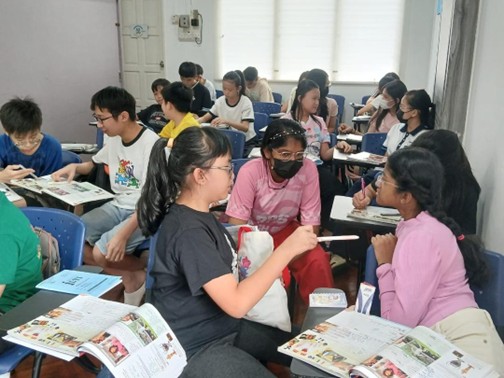
Group activities create opportunities for students to interact with their peers while practising English naturally. Instead of simply listening to a teacher, students actively participate in conversations, ask questions, and share ideas.
For example, during a group storytelling activity, students may work together to create a story in English. Each student contributes a sentence or idea, building the story step by step. This encourages students to listen carefully, think creatively, and communicate clearly.
Through collaboration, students learn to respect different viewpoints and support one another. They also become more comfortable expressing themselves in English because they are learning in a supportive and friendly environment.
These collaborative experiences help students realise that learning a language is not just about accuracy—it is also about communication and connection.
Building Communication Skills
Communication is one of the most important skills students develop through group activities. When learners work together, they must explain their thoughts, ask questions, and respond to others.
Activities such as role-playing, debates, or problem-solving tasks encourage students to practise speaking in real-life situations. For instance, students might act out a scene in a restaurant where one student plays the waiter and another plays the customer. Through this activity, they practise vocabulary, sentence structures, and polite expressions while learning how conversations naturally flow.
Teen learners especially benefit from these interactions because they are developing independence and forming their identities. Group activities give them the chance to practise expressing opinions, negotiating ideas, and listening respectfully to others.
Over time, these experiences improve both fluency and confidence, helping students feel more comfortable speaking English in school and in everyday situations.
Developing Teamwork and Responsibility
Working in groups also teaches students the value of teamwork. When completing a project together, each student has a role and responsibility. Some students may lead discussions, others may research information, while others may present the final results.
For example, a group presentation project might ask students to research a topic such as environmental protection or healthy lifestyles. Each team member contributes different ideas, and together they create a presentation in English.
This process encourages students to organise their ideas, cooperate with others, and support their teammates. They learn that success often comes from working together rather than competing individually.
These teamwork experiences also build important life skills such as leadership, responsibility, and accountability—qualities that will benefit students in both academic and professional settings.
Encouraging Confidence and Participation
Many students feel nervous about speaking English, especially in front of a class. Group activities help reduce this anxiety because students are speaking with a smaller group of peers rather than addressing the entire class.
When learners feel comfortable with their classmates, they are more willing to participate, share opinions, and practise new vocabulary. Positive encouragement from teammates can also motivate students to try harder and take risks in using the language.
For example, a team quiz game allows students to answer questions together. Instead of worrying about making mistakes alone, students can discuss answers and support each other. This collaborative atmosphere transforms learning into an enjoyable and motivating experience.
As confidence grows, students become more active participants in classroom discussions and more independent learners overall.
Strengthening Social and Emotional Skills
Group learning also plays an important role in developing social and emotional intelligence. Students learn to listen patiently, respect different opinions, and resolve disagreements constructively.
In group discussions, students practise skills such as taking turns speaking, acknowledging others’ ideas, and offering constructive feedback. These interactions help build empathy and mutual understanding among classmates.
For teenagers in particular, these experiences are essential. Adolescence is a time when young people are learning how to communicate effectively and build relationships. Group activities provide a safe environment where they can practise these skills while learning English.
When students feel connected to their peers, they are also more motivated to learn and participate in class.
Preparing Students for Real-World Communication
In the real world, communication rarely happens in isolation. Whether in university, the workplace, or social settings, people often work together in teams and collaborate on projects.
Group activities in English classrooms simulate these real-life situations. Students learn how to express ideas clearly, listen to others, negotiate solutions, and present information effectively.
For example, a problem-solving activity might ask students to work together to plan a school event or design a community project. In the process, they practise discussing ideas, making decisions, and presenting their final plan in English.
These practical experiences prepare students for future academic studies, international environments, and global careers where teamwork and communication are essential.
How ILTI Encourages Group Learning
At ILTI, our programmes integrate group-based learning activities to ensure that students practise English in dynamic and meaningful ways. Lessons often include:
- Pair discussions and group brainstorming
• Role-play scenarios and interactive storytelling
• Collaborative presentations and projects
• Team games and vocabulary challenges
These activities allow students to learn from one another while strengthening their language abilities. By combining structured lessons with interactive teamwork, we create a learning environment where students feel motivated, confident, and engaged.
Our goal is not only to help students master English but also to develop the interpersonal skills they need to succeed in school and in life.
Practical Tips for Parents
Parents can also encourage teamwork and communication skills at home:
- Encourage your child to participate in group activities or clubs.
• Organise small group study sessions with friends.
• Play interactive games that require teamwork and communication.
• Encourage your child to discuss ideas and share opinions openly.
These simple activities help reinforce the social and communication skills students develop in the classroom.
Vocabulary Gallery
Collaboration – working together with others to achieve a goal
Fluency – the ability to speak or write a language smoothly and naturally
Role-play – acting out real-life situations to practise communication
Participation – taking part actively in an activity or discussion
Responsibility – being accountable for a task or duty
Empathy – the ability to understand and share the feelings of others
Constructive feedback – helpful suggestions that improve performance
Negotiation – discussing ideas to reach an agreement
Communication – sharing information, thoughts, or ideas with others
Interpersonal skills – the abilities used to interact effectively with people
___________________________________
Group learning transforms language classrooms into communities where students learn from one another, develop friendships, and practise communication in authentic ways. When students learn English through teamwork and collaboration, they gain more than language skills—they develop confidence, empathy, and the ability to work effectively with others.
At ILTI, we are proud to nurture these skills while guiding students on their English learning journey.
Your English learning journey starts here. Call/WhatsApp: 010-395 3067 or email us at info@ilti.edu.my
Transform your English skills—one word at a time.