
Finding My Rhythm in Primary School
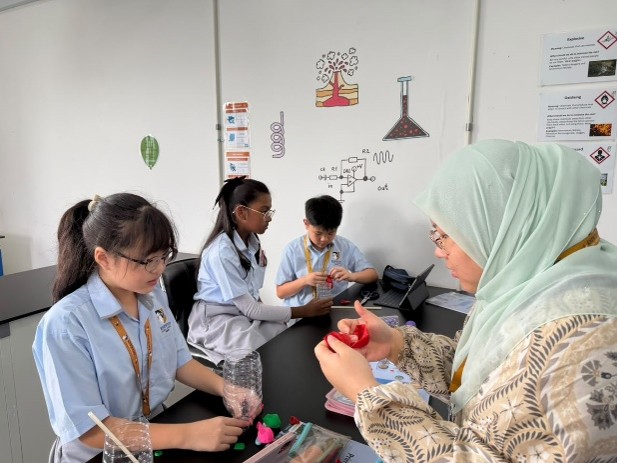
Finding My Rhythm in Primary School
By Ms Amira Nurdiini Rosli, Year 6 Homeroom, Knewton Global Schools Rawang
Before I joined Knewton Global Schools Rawang, I had spent three years teaching high school ESL. Working with 16-to-18-year-olds wasn’t all smooth sailing, but there was a certain predictability to it. My students were usually occupied with written assignments; I would introduce a language concept, model what they needed to do, and they would get on with their assignments. That cycle repeated all year long.
Naturally, when I decided to take a leap of faith into primary education, I made the naive assumption that teaching younger children would be much less challenging.
I was completely wrong.
There is a common belief that teaching gets easier by your third or fourth year, and that you’ll finally find your groove in your fifth. The irony is that this is my fourth year as a teacher, yet stepping into a primary classroom made me feel like a beginner again.
When I first made the transition, I felt genuinely apprehensive. I was so accustomed to teaching older students that I initially found myself expecting elaborate and polished answers, and a certain level of independence that simply wasn’t realistic for younger students.
Skimming through my students’ child-like responses and deciphering messy, lopsided handwriting put me on edge during my first couple of weeks. It took a while to realise that the problem wasn’t necessarily their work; it was my expectations.
I needed to stop judging them by secondary school standards and start meeting them where they actually were. Primary students aren’t miniature versions of teenagers. They learn differently, respond differently, and, perhaps most importantly, need a completely different kind of teaching.
Now, a little over a month into my time at KGSR, my perspective is slowly shifting, and I am beginning to appreciate just how different that kind of teaching can be. My students are sweet, full of wonder and constantly find unexpected ways to melt my heart.
Yet, underneath the joy, the transition hasn’t been without its internal hurdles. A change of environment always triggers my anxiety, and I still panic whenever a lesson plan doesn’t unfurl as I had imagined. Moving from quiet drilling to high-energy primary activities has forced me to rethink what a successful lesson actually looks like.
It isn’t enough for me to explain a concept clearly and expect students to work independently. I have to think about movement, energy, attention spans, games, visuals, interaction, and about a dozen other things that can determine whether an activity succeeds or falls completely flat.
What I am slowly learning is that becoming the teacher my students deserve isn’t about delivering a flawless, textbook-perfect lesson every single hour. It’s about creating engaging, joyful experiences for young minds while giving myself the grace to grow along the way.
Sometimes, I need to remind myself to take a step back, breathe, and take things one step at a time.
Progress doesn’t happen overnight, and as long as I continue showing up willing to learn and adapt, I know I am moving in the right direction.
Challenging Vocabulary
Predictability – The ability to know or expect what is likely to happen
Accustomed – Being familiar with something because you have experienced or done it often, making it feel normal or usual.
Apprehensive – Anxious or fearful about a possible, usually negative, future event.
Genuine – Truly being what something is said to be; authentic, sincere, or not fake.
Hurdle – A physical barrier that a runner or horse jumps over in a race, or a metaphorical problem and difficulty that you must deal with to achieve success.
Flawless – Having no mistakes, imperfections or defects
Naïve – Lacking experience, wisdom, or judgment; often implies an innocent belief in things that aren’t quite true.
Unfurl – To open, unroll, or spread out something that has been rolled or folded up tightly.
Speak English flawlessly and open doors to opportunities around the world!
A strong command of English is valuable in every profession, especially in education. Teaching different age groups requires effective communication, confidence and the ability to express ideas clearly.
Whether you aspire to become an educator or simply want to communicate better, your journey starts with the right foundation.
Come to ILTI and start your English learning journey today!
Call/WhatsApp: 010-395 3067 or email us at info@ilti.edu.my
Transform your English skills—one word at a time.