
Chasing Heights: Kinabalu and the Making of Resilience
Chasing Heights: Kinabalu and the Making of Resilience
By Ms Bong Sew Hwa, Primary and Secondary Teacher – Mandarin as Foreign Language, Knewton Global Schools Rawang
In life, we are often summoned not by circumstance alone, but by an inner calling to confront the unseen mountains within us. My journey to Mount Kinabalu was not merely a physical ascent, but a quiet unfolding of self-awareness. Beneath the demands of altitude and terrain lay a deeper encounter—with uncertainty, with limitation, and ultimately, with growth.
Preparation began long before the mountain came into view. In the dim stillness of early mornings, my students and I gathered at Batu Caves, returning week after week to its 272 steps. What first appeared routine gradually evolved into ritual. Each climb became an exercise in rhythm and restraint—measured breathing, deliberate pacing, and the steady negotiation between effort and fatigue. Over time, the repetition refined not only our physical strength but also our capacity for focus.
Yet it was within these shared moments that my reflection as an educator deepened. I watched my students encounter challenge in their own ways—some with quiet resolve, others with hesitation that slowly gave way to courage. In guiding them, I became increasingly aware that teaching is less about direction and more about presence. Like the climb itself, it demands patience, attentiveness, and the humility to recognise that growth unfolds differently for each individual.
On the mountain, distractions fell away. Each step became intentional, each breath a reminder of my own limits. The body laboured, but it was the mind that required greater endurance. It was here that I understood that resilience is not a fixed trait, but a practice—formed in moments when continuing feels uncertain, when the path ahead is obscured, and yet one chooses to proceed.
There were moments when doubt surfaced quietly, almost imperceptibly. Progress slowed, and the summit felt distant. In those spaces, I came to recognise that perseverance is seldom dramatic. It resides in the ordinary decision to take the next step, even when certainty is absent. In many ways, this mirrors the work of an educator—where effort is continuous, outcomes are gradual, and belief must remain steady.
The mountain’s silence fostered a profound sense of camaraderie. Without the need for words, connection emerged through shared effort and mutual understanding. It reflected the unspoken bonds within a classroom—relationships built not through grand gestures, but through consistency, trust, and time.
As we climbed in the early hours, guided only by dim light and instinct, the journey demanded fortitude. There was little to anchor the mind beyond the rhythm of movement. In that stillness, I reflected on the necessity of remaining unwavering—not rigid, but grounded in purpose. As educators, we are often required to hold that steadiness, offering direction even when the path is not immediately clear.
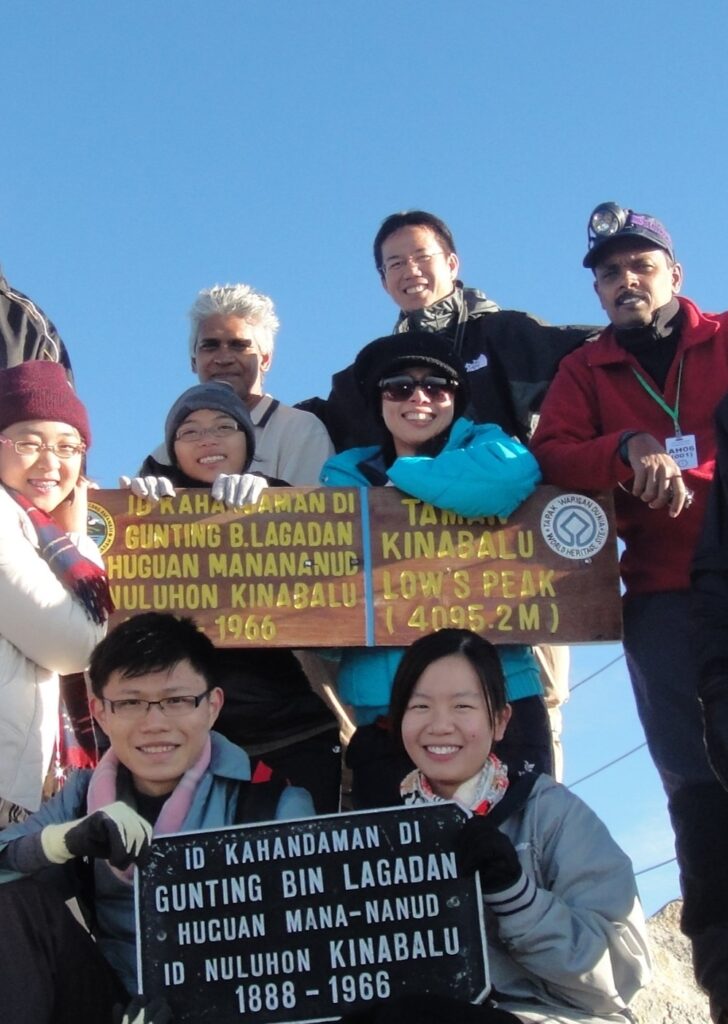
Reaching the summit was neither triumphant nor loud. It was, instead, a transcendent stillness—a moment suspended between effort and arrival. Standing above the clouds, I felt not conquest, but clarity. The mountain had not been something to overcome, but something that revealed.
In that moment, I crossed a personal threshold—an understanding that both teaching and climbing are not defined by their outcomes, but by the transformation they invite. We do not guide students merely towards achievement, but towards awareness—of their strengths, their limits, and their capacity to grow.
Not all who began the climb reached the summit, and this, too, carried quiet significance. It reminded me that progress is not linear, nor is it uniform. As educators, our role is not to measure worth by completion, but to recognise effort, to honour individual journeys, and to support with discernment.
Ultimately, this experience reshaped my understanding of both resilience and teaching. In training alongside my students, in walking beside them rather than ahead, I came to see that education is a shared ascent—one that requires reflection as much as instruction. The mountain remained unchanged, yet I did not. And in that subtle transformation, I discovered that true resilience lies not in conquering, but in understanding—of self, of others, and of the journey that continues beyond the summit.
Key Vocabulary
Summoned – called or invited to undertake something important or challenging
Ascent – the act of climbing upwards, especially a mountain
Endurance – the ability to persist through difficulty or hardship
Resilience – the capacity to recover and remain strong after challenges
Perseverance – continued effort despite obstacles or setbacks
Camaraderie – mutual trust and friendship among people sharing an experience
Fortitude – mental strength in facing adversity with courage
Unwavering – steady and resolute; not weakening
Transcendent – beyond ordinary experience; deeply uplifting or spiritual
Threshold – a point at which a significant change or transition begins
At ILTI, learning goes beyond textbooks and examinations. Through reading, writing and meaningful discussions, students develop the ability to express themselves with confidence and preserve stories that matter.
Mrs Angela Toh’s heartfelt recollection of her childhood in old Ipoh reminds us that good writing does more than describe experiences – it brings memories to life and connects generations.
Let’s be aspired to write with clarity, creativity and purpose. Join us at ILTI and discover how language can become a lifelong gift.
Your English learning journey starts here. Call/WhatsApp: 010-395 3067 or email us at info@ilti.edu.my
Transform your English skills—one word at a time.